

ERP Upgrade and Validated Data Migration
Five-plus installations, upgrades and migrations across production and non-production — 5,000+ records validated, audit-ready on day one.
Client
Mid-Market Enterprise, Multi-Environment ERP Landscape
Industry
Enterprise Systems · ERP Modernisation
Duration
9 months
Year
2025
Background
An established enterprise had fallen several versions behind on its Sage X3 platform. Staying put meant losing vendor support and blocking every downstream integration; moving meant migrating years of master and transactional data, plus accumulated customisations, without breaking a live finance function. Previous upgrade attempts had stalled over exactly that risk.
The Challenge
In a migration, the dangerous failures are silent. Records land in the target system, counts reconcile, and a rounding rule or a dropped analytical dimension quietly corrupts reporting for months. The programme needed migrated data proven accurate and audit-ready across every environment — not merely present — and the business needed the upgrade rehearsed enough times that production cutover held no surprises.
Our Solution
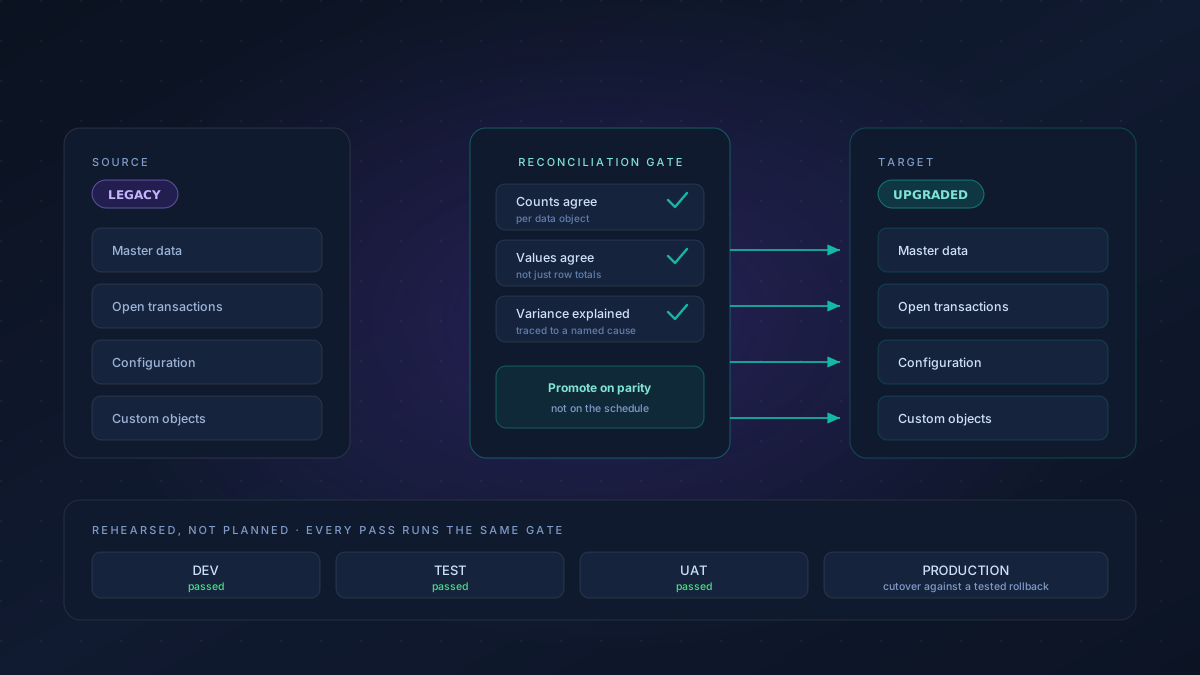
SageWare supported installations, upgrades and migrations across production and non-production environments. Each pass followed the same discipline: migrate, then reconcile migrated master and transactional data against source, trace every variance to root cause, and verify environment parity before promoting. We validated over 5,000 master and transactional records, confirmed configuration and custom object fidelity in the upgraded target, and rehearsed cutover until the runbook — including rollback — was proven. End-user training accompanied each release to keep adoption ahead of the change.
Key Deliverables
- 5,000+ master and transactional records validated during migration and upgrade
- Installations, upgrades and migrations across production and non-production environments
- Configuration and custom object fidelity verified for audit-ready reporting
- Cutover rehearsed against a proven runbook with tested rollback procedure
Results & Impact
How We Did It
01
Environment & Dependency Audit
Catalogued every environment, customisation and integration dependency, then sequenced the upgrade path to isolate risk before any data moved.
02
Rehearsed Migration Passes
Ran repeated migrations into non-production, reconciling master and transactional data against source and driving every variance to root cause.
03
Validation & Parity Checks
Verified configuration, custom object fidelity and environment parity in the upgraded target, confirming reporting accuracy and audit readiness.
04
Cutover & Enablement
Executed production cutover against a proven runbook with tested rollback, and delivered end-user training to 30+ users across affected functions.
Decisions & Trade-offs
Rehearse the migration rather than plan it
A migration plan is a document; a rehearsed migration is evidence. Every pass ran into a non-production environment first and was reconciled there, so by the time we touched production the procedure had already been executed several times against real data. The alternative — a single cutover that is also the first cutover — is where previous attempts at this upgrade had stalled.
Reconcile on value, not on row count
Matching record counts prove that rows moved. They prove nothing about whether the rows moved correctly, and the failures that hurt in a finance migration are the quiet ones: a rounding rule, a dropped analytical dimension, a currency applied at the wrong date. We reconciled counts and values per data object, and treated any delta as unexplained until someone could name its cause.
Promote on parity, not on the schedule
Environments moved forward when they matched, not when the plan said they should. That cost calendar time on two occasions and is the reason the production cutover carried no surprises. A date is a poor reason to promote an environment that has not yet reconciled.
Keep the rollback tested, not merely written
A rollback procedure nobody has executed is an assumption. We restored from backup into a non-production environment and verified the restored system was usable, so the go/no-go decision at cutover rested on something we had actually done rather than something we had documented.
Scope & Boundaries
We owned the migration and its validation, not the upgrade of the surrounding estate. Third-party add-ons were re-certified against the target version by their own vendors; we verified the integration points but did not remediate the add-ons themselves. Historical data beyond the agreed retention window was archived rather than migrated, at the client’s direction.
Next Case Study
Manufacturing Execution and Material Planning
Manufacturing · Production Planning